

Injectable
BPC-157Body Protection Compound
A synthetic pentadecapeptide explored for its role in tissue recovery, soft-tissue healing, and gut integrity.
- 15-amino-acid synthetic pentadecapeptide
- Studied for tendon, ligament, muscle, nerve, and GI tissue support
- Reconstituted from lyophilized powder per clinician protocol
- Typically dosed Monday through Friday
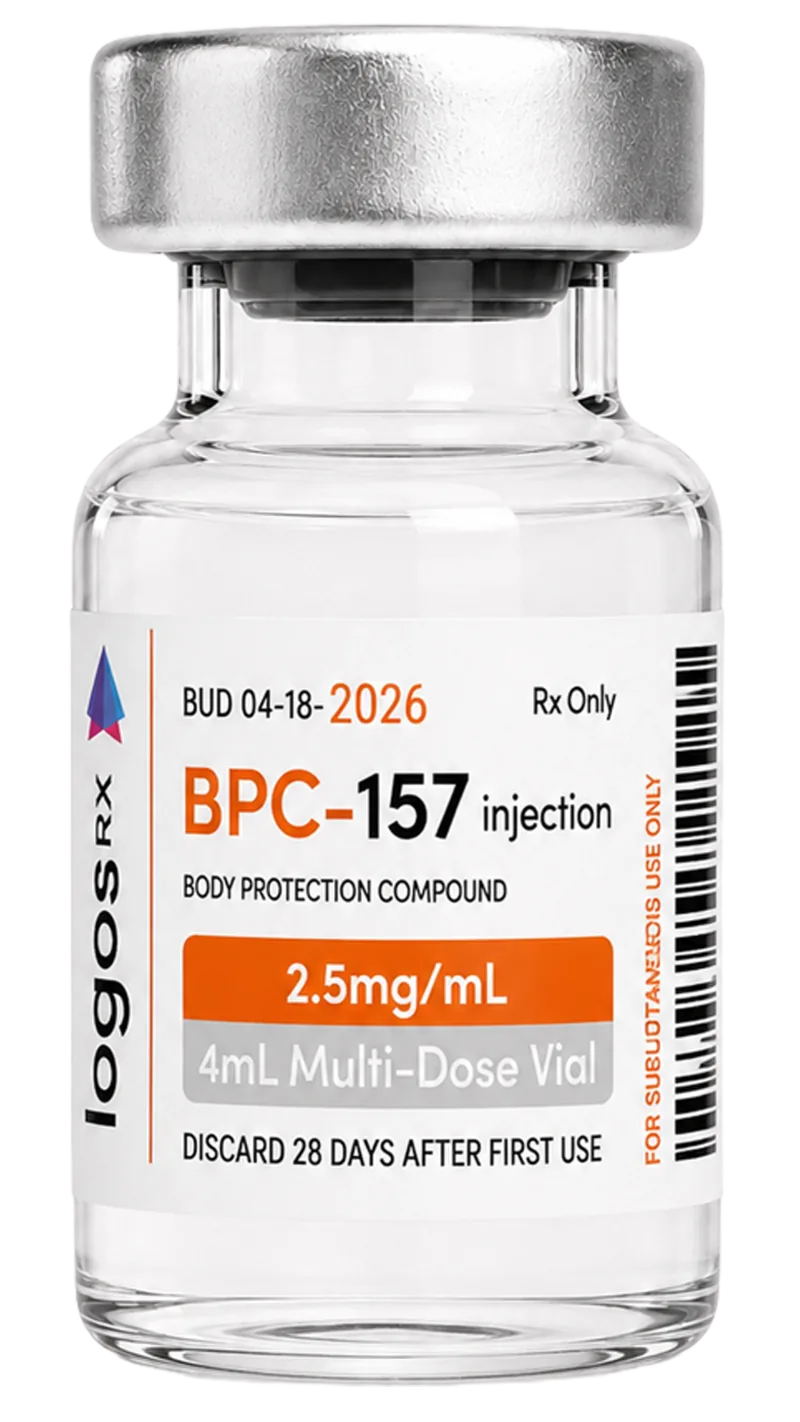
About the ingredient
BPC-157 (Body Protection Compound)
A synthetic 15-amino-acid peptide derived from a protective sequence identified in human gastric juice; commonly studied in preclinical models of tissue repair.
BPC-157 is a biologically active synthetic pentadecapeptide composed of 15 amino acids and is commonly discussed in regenerative, sports medicine, and tissue-recovery protocols for its potential role in supporting healing and cellular repair. It is derived from a protective peptide sequence associated with gastric tissue and has been studied for its effects on inflammation modulation, collagen organization, angiogenesis, blood-flow support, and soft-tissue recovery.
Mechanistically, BPC-157 is believed to influence several repair pathways involved in tendon, ligament, muscle, nerve, skin, and gastrointestinal tissue health. Preclinical studies suggest that it may help support fibroblast activity, improve vascular response, promote extracellular matrix remodeling, and assist in maintaining mucosal integrity within the gastrointestinal tract. These properties make it of interest in clinical discussions involving musculoskeletal recovery, connective-tissue strain, gut irritation, and post-injury rehabilitation support.
In practice, BPC-157 is often supplied as a lyophilized peptide that is reconstituted with bacteriostatic or sterile water according to clinician-directed protocols. It may be incorporated as part of a broader recovery plan that can include physical therapy, nutrition optimization, sleep support, anti-inflammatory strategies, hormone evaluation, and careful monitoring of symptoms and functional progress.
Tissue repair pathways
Preclinical research suggests BPC-157 may influence fibroblast activity, angiogenesis, and extracellular matrix remodeling.
Gut and connective-tissue interest
Investigated for potential roles in mucosal integrity, tendon strain recovery, and post-injury rehabilitation.
Lyophilized for stability
Supplied as a freeze-dried peptide reconstituted on-site to preserve activity until the moment of use.
How to take
A consistent routine matters.
Follow the specific directions from your healthcare provider. These steps are a general reference for injectable administration.
- 1
Inspect the vial — solution should be clear and free of particles before each use.
- 2
Clean the vial stopper with a fresh alcohol swab and let it air-dry.
- 3
Draw the prescribed dose using an insulin syringe; tap out any air bubbles.
- 4
Inject subcutaneously into the abdomen, thigh, or upper arm, rotating sites each dose.
- 5
Discard the used syringe immediately in an FDA-cleared sharps container.
Product Details
Available formulations
| Vial Total mg | Concentration | mL |
|---|---|---|
| 10 mg | 2.5 mg/mL | 4 mL |
Typical dosage & titration
Recommended titration schedule
Reference schedule only — your provider may adjust the timing or dose based on your individual response and lab work.
| Weeks | Units | MG | ML | SIG / Directions |
|---|---|---|---|---|
| 1–12 | 25 | 0.5 mg | 0.25 mL | Inject 25 units subcutaneously five times per week (Mon–Fri) on the injured area. |
FAQ
Frequently asked questions
Provider workflow
Ready to prescribe BPC-157?
Submit a prescription through the Logos RX provider portal, or reach out to our pharmacy team for formulary, dosing, or patient-onboarding questions.
BPC-157
Provider onboarding portal